


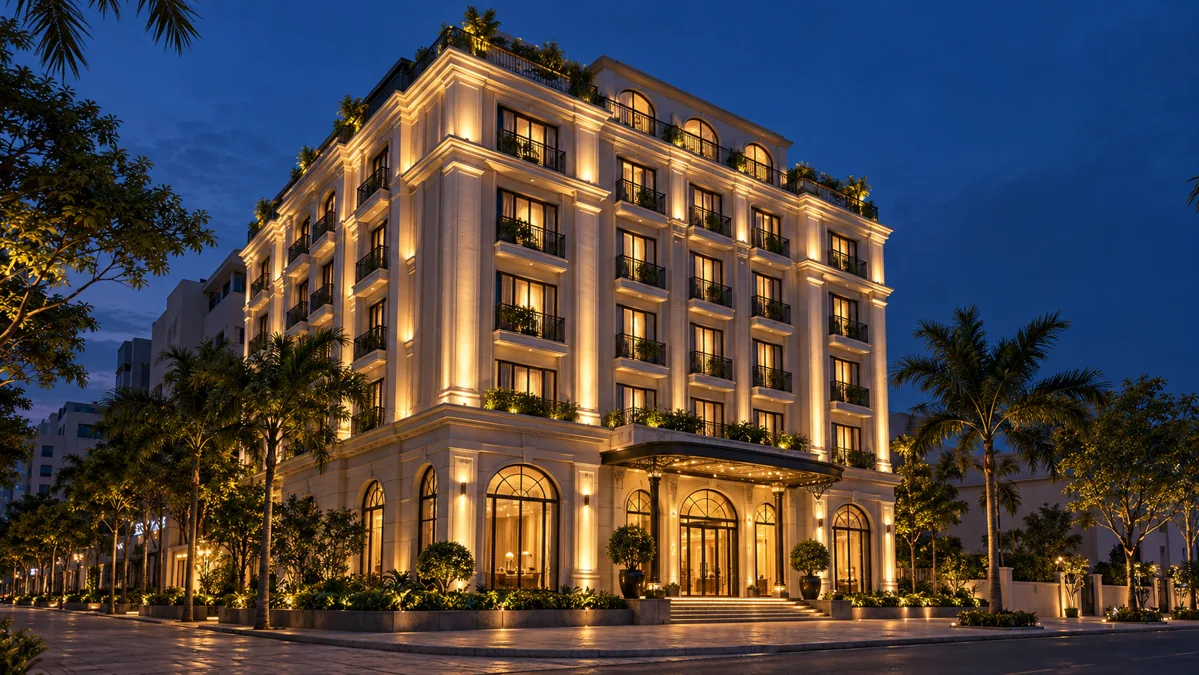
Architectural lighting uses light to reveal the form, materials and lines of a building at night. Unlike general lighting, which only aims to provide enough light to see, architectural lighting chooses what is lit and what stays dark, so the building gains depth and is recognisable from a distance.
How architectural lighting differs from general lighting
- Purpose: general lighting provides enough illuminance for movement and work. Architectural lighting creates an image and an identity for the building.
- Layout: instead of lighting everything evenly, it picks out the elements worth highlighting, such as columns, cornices, roofs, louvres and logos.
- Control: it usually has several scenes for weekdays, weekends and holidays rather than just on and off.
7 common facade lighting techniques
1. Wall washing
Wide-beam floodlights cover a wall evenly. Suits flat, light-coloured facades. Avoid spilling light into windows.
2. Grazing
Fixtures sit very close to the base of the wall and light almost parallel to the surface. This brings out the texture of stone, brick and rough finishes.
3. Accent lighting
Narrow beams pick out a single feature such as a relief, a logo or a main column, creating a focal point.
4. Contour lighting
LED lines follow roof edges, floor slabs or building corners, redrawing the outline of the building. Easy to recognise from afar and low in energy use.
5. Column and louvre uplighting
Fixtures at the base or top of columns and vertical louvres create a repeating rhythm of light and shade. Ideal for facades with louvres or vertical columns.
6. Backlighting
Light placed behind a layer such as louvres, frosted glass or raised letters creates a silhouette. Often used for signage and logos.
7. LED pixel and media facades
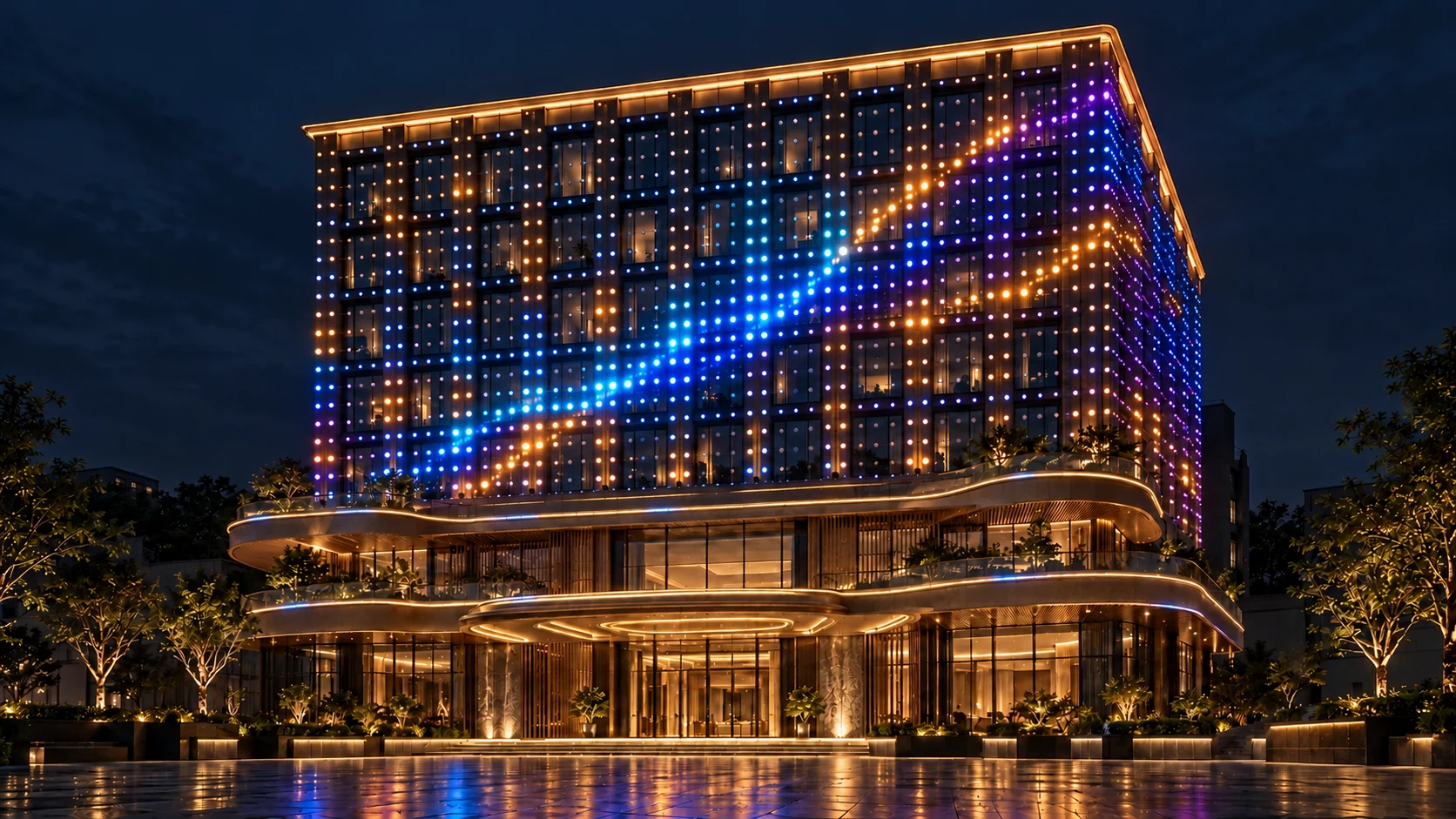
Each LED point is controlled individually and together they form images or moving effects across the facade. This is the highest level of investment and suits buildings that want to become a landmark.
Colour temperature and colour
Warm white of around 2700 K to 3000 K suits stone, timber and premium buildings. Neutral white of around 4000 K suits glass and metal. RGBW fixtures can change colour for holidays and events. Whatever you choose, a building should keep one dominant tone so its image does not look cluttered.
Common mistakes
- Lighting too brightly and evenly: the building looks flat and loses depth.
- Glare into rooms and onto passers-by: uncomfortable for guests and neighbours.
- Choosing fixtures before designing: too many lights where they are not needed and too few where emphasis is needed.
- Ignoring maintenance access: fixtures in hard-to-reach places are expensive to repair every time.
See also our architectural lighting solutions.
Where to start
The most effective way is to see the options on an image of your own building. ARTTEC builds a 3D simulation so you can compare options and sign off before design, contract and installation. See the indicative facade lighting budgets.
Frequently asked questions
Does architectural lighting use a lot of electricity?
With LED fixtures and targeted design, consumption is usually far lower than using high-power floodlights to light everything evenly. Timers and dimming after midnight save more.
Do small buildings need architectural lighting?
Yes. Even for a townhouse or a small showroom, a lit roofline and logo are enough to stand out at night.
Want to see how your building could look at night? Send a photo of the facade via Zalo +84 935 004 188 to discuss options.
