


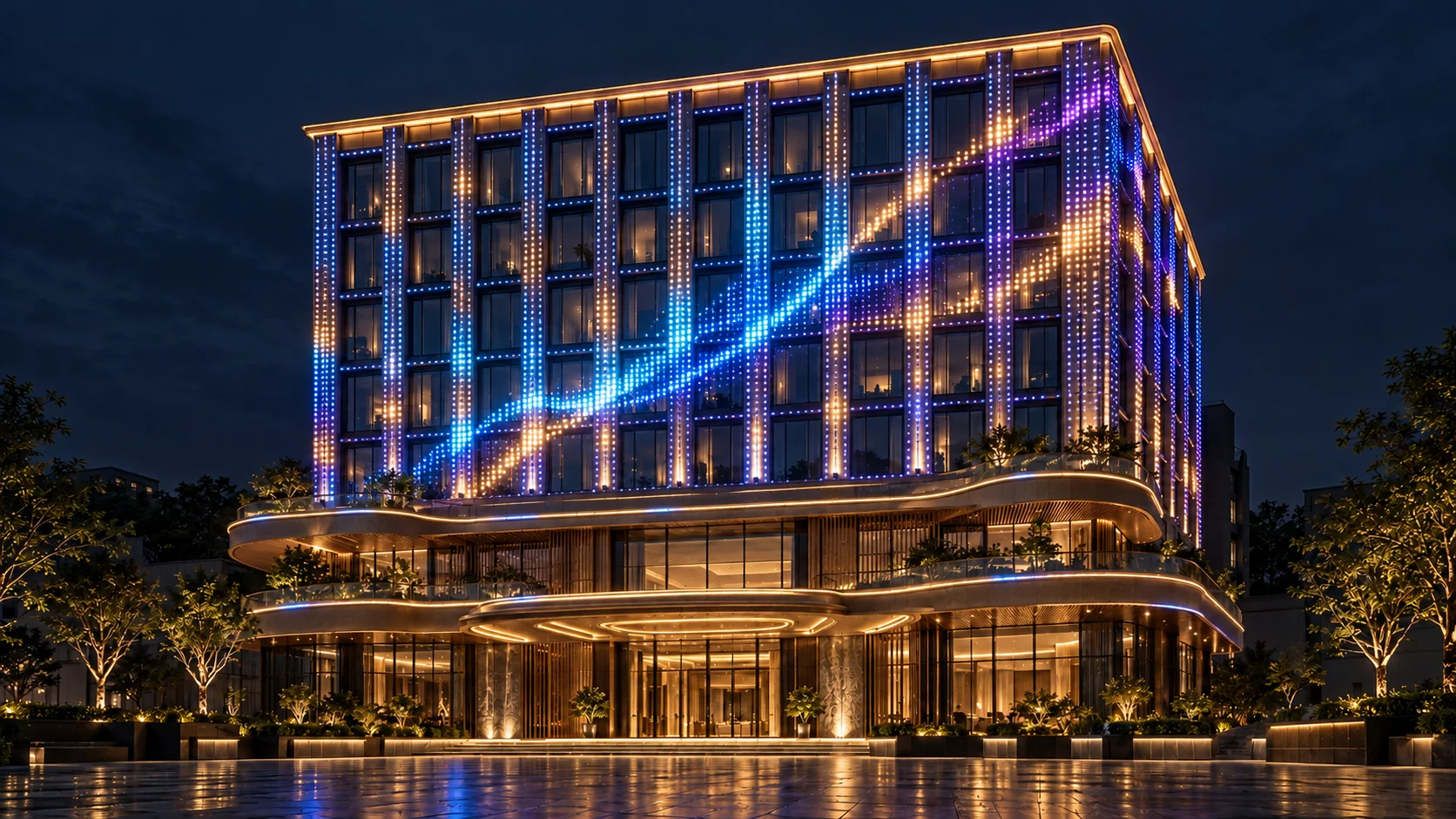
On a facade with hundreds of fixtures, a failed light is usually only noticed when someone sees it from the street. Finding the exact fixture, checking the cause and re-addressing a replacement then takes hours more on the gondola. RDM lets the system report faults itself and removes much of that work.
What is RDM?
RDM (Remote Device Management) is a standard for managing devices remotely over the DMX512 line itself, defined in ANSI E1.20. Standard DMX only sends commands one way, from the controller to the fixtures. RDM lets fixtures reply, so the controller can query and receive information from each device.
What RDM does for a building
- Device discovery: the controller finds every fixture on the line and lists the active devices.
- Remote DMX addressing: when a new fixture is fitted, there is no need to climb up and set its address switches.
- Status and fault reporting: which fixture has lost connection, has a power fault or is overheating, depending on what the device supports.
- Parameter monitoring: temperature, operating hours and firmware version.
Benefits in operation
Planned maintenance instead of firefighting
Knowing in advance which fixtures are faulty or running hot lets the maintenance team combine jobs into one gondola trip instead of several. On high-rise facades this is the biggest saving.
Fast replacement, right first time
Knowing the exact location of the failed fixture and addressing it remotely shortens replacement time and reduces errors.
Reporting to the owner
Combined with a 4G controller, the system status is sent to building management, giving clear evidence for each maintenance visit.
What RDM requires
- Fixtures and decoders must support RDM. Check this when selecting equipment.
- DMX splitters and boosters must support RDM, because standard splitters block the return signal.
- A controller or software with RDM functions to read and display the data.
- DMX cabling to standard: suitable cable, termination at the end of the line and no improvised branches.
See also DMX and RDM in musical fountain systems.
New projects and existing buildings
On new projects, choose RDM-capable equipment from the start: the extra cost is small compared with the maintenance benefit later. On existing buildings, RDM can be introduced when fixtures and splitters are replaced, keeping the DMX cabling if it is still in good condition. See our overview of solutions for new and existing buildings.
Frequently asked questions
Can an existing DMX system add RDM?
Yes, if the fixtures support RDM. Usually only the splitters need replacing and the controller upgrading, without rewiring everything.
Does RDM slow down lighting effects?
RDM shares the same line with DMX data. A properly configured system does not affect effects during a show.
Want your lighting to report its own faults? Contact us on Zalo +84 935 004 188 for advice on the setup.

2 thoughts on “RDM Fault Monitoring: Know Which Light Has Failed Without Climbing”