


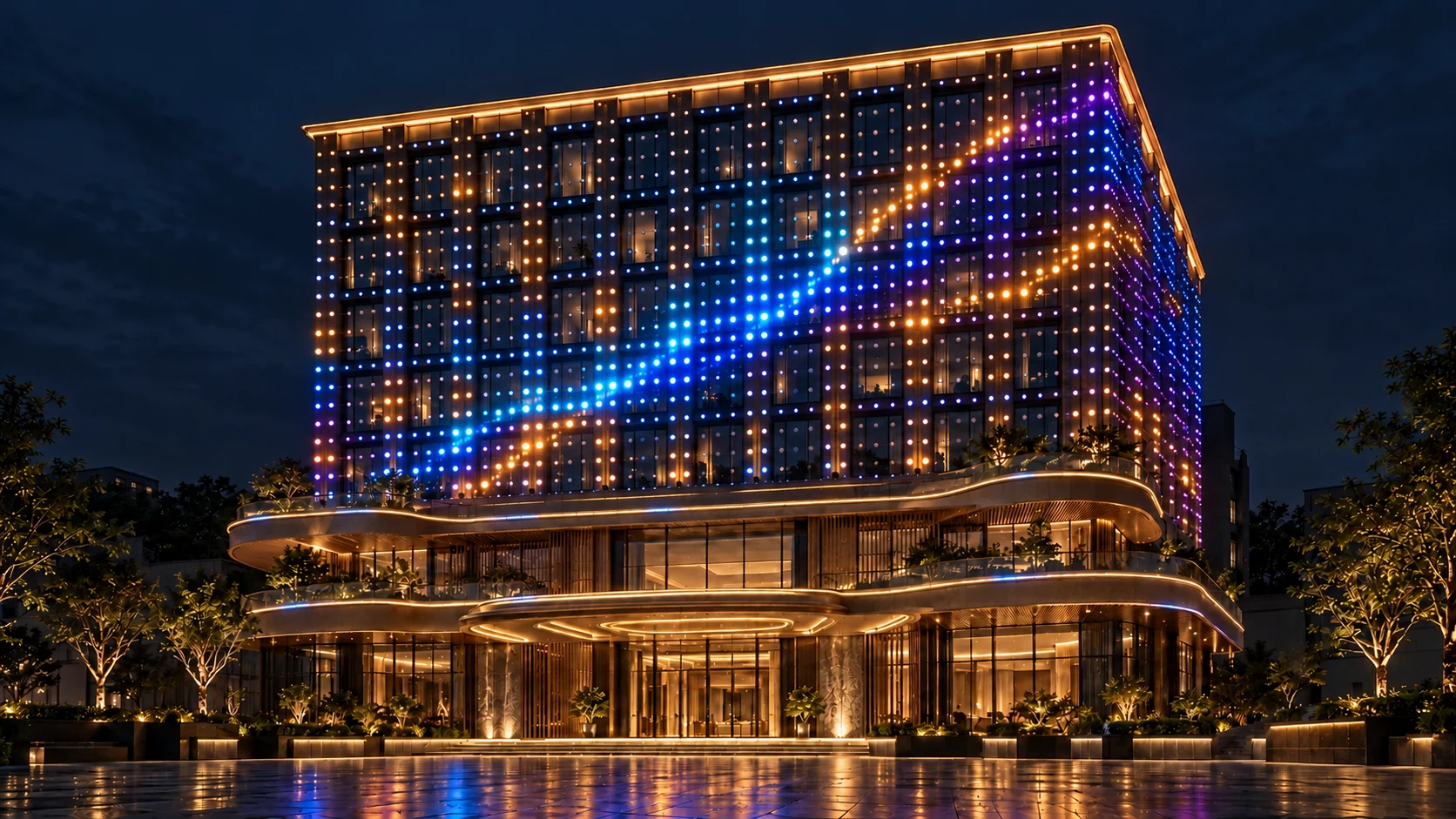
In the past, changing a building’s lighting scene meant a technician visiting the control cabinet. Making several buildings light up in sync meant running network cables between them. A 4G-connected controller changes both.
What is a 4G controller?
It is a lighting controller with a mobile SIM that connects to the internet over 4G. It still outputs the usual lighting control signal, such as DMX512, but adds a remote channel to receive commands, update shows and report its status.
Synchronising several sites without cables
When several buildings, bridges or landscape areas need to light up together, the controllers share a common time reference over the network to run shows at the same moment. The benefits:
- No fibre or network cable between buildings, across roads or across rivers.
- New sites are easy to add to the synchronised group: just install a controller and configure it.
- Ideal for hotel chains, urban areas and streets that want shared effects on holidays.
Remote management from a phone or computer
- Change scenes instantly for events, VIP guests and holidays without anyone going on site.
- Schedules and yearly calendars: preset scenes for weekdays, weekends, Tet and National Day.
- Update shows remotely when you want to refresh the image.
- User roles: owners, building management and maintenance teams get different permissions.
Alerts when something goes wrong
The controller can report power loss, loss of connection or a system not running to schedule. Combined with RDM fault monitoring, the operator also knows which fixture has failed without inspecting every floor.
Points to check when deploying
- Coverage: check the 4G signal where the cabinet sits. An external antenna may be needed if the cabinet is in a closed plant room.
- Standalone operation: shows and schedules are stored in the controller, so the lights keep running during a temporary signal loss.
- Security: change default passwords, set user roles and keep the software up to date.
- Data plan: include the monthly SIM data cost in running costs.
For new projects and existing buildings
On new projects, a 4G controller reduces the network infrastructure to be installed. On existing buildings, it is often the quickest way to turn an on/off system into one with schedules, scenes and remote management, without running new network cables through an occupied building. See also standalone remote control for fountains and our overview of solutions for new and existing buildings.
Frequently asked questions
Do the lights go off if 4G is lost?
No. The controller runs the stored shows. Losing signal only affects remote control and reporting during that time.
Can Wi-Fi or wired networking be used instead of 4G?
Yes, if the building has a reliable network. 4G suits sites without an existing network or where the lighting should be kept separate from the building’s internal network.
Want to manage your building lighting from your phone? Contact us on Zalo +84 935 004 188.

2 thoughts on “4G Lighting Controllers: Synchronise and Manage Facade Lighting Remotely”